Schools
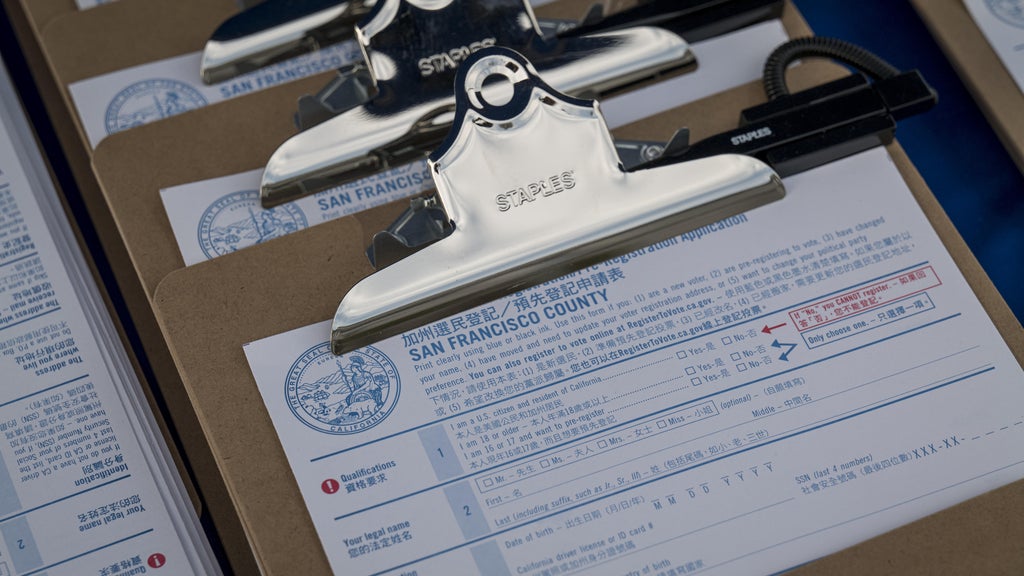
You can still register to vote on Election Day 2026 in California. Here's how.
By Katherine Langford
Advertisement · Why this ad?
Katherine oversees editorial operations across all six brands. Before joining The Meridan Group, she spent 14 years at the Minneapolis Star Tribune, where she led the metro desk through its digital transformation. She holds a Master's in Journalism from Northwestern's Medill School.
More from Katherine →
As the sun rises over the quiet streets of Atherton, residents are already beginning to think ahead to the 2026 midterm elections. For many, the act of voting is a cherished civic duty, a moment where personal values and community engagement converge. However, as the election approaches, it is essential for voters to understand what they need to bring to the polls to ensure their voices are heard.
California has long been recognized for its progressive voting policies, which generally do not require voters to present identification at the polls. However, as we prepare for the 2026 midterms, changes in regulations and specific circumstances may necessitate some residents to bring identification. Understanding these requirements is crucial for ensuring a smooth voting experience.
Typically, California voters can cast their ballots without presenting any form of ID. This accessibility is part of the state's commitment to encourage participation in the democratic process. However, there are exceptions that voters must be aware of, particularly those who are registering for the first time.
Individuals who registered to vote by mail and did not provide their driver's license number, California ID number, or the last four digits of their Social Security number will need to show proof of identity on Election Day. This requirement is designed to protect the integrity of the electoral process while still promoting voter engagement.
For those who find themselves in the position of needing to present identification, the California Secretary of State outlines several acceptable forms of ID that voters can bring to the polls. These include a copy of a recent utility bill, a sample ballot booklet received from the county elections office, or any document sent by a government agency. Additionally, standard forms of identification such as a passport, driver’s license, or official California ID are also valid.
Students are not left out, as student identification cards that display both the name and photograph of the voter are acceptable as well. Military IDs also meet the requirements, ensuring that those who serve our country can participate in the democratic process without barriers.
In a community like Atherton, where education and civic engagement are highly valued, it’s important for residents to be aware of these requirements. The information is readily available on the California Secretary of State's website, which provides comprehensive details about voting in the state.
One common misconception among voters is that they must carry their voter registration card to the polls. Fortunately, this is not the case in California. Voters can cast their ballots without having their voter registration card in hand. This policy is particularly beneficial for those who may misplace their cards or simply forget to bring them on Election Day.
However, first-time voters who registered by mail and did not provide the necessary identification details will need to present an acceptable form of ID. This stipulation is in place to ensure that all voters can be verified and that the electoral process remains fair and transparent.
Election Day can be hectic, and it’s not uncommon for voters to forget their identification. For those who do forget their ID, the rules can vary based on their voting history. If it is your first time voting and you have not provided an acceptable form of identification, you will be required to show ID before you can cast your ballot.
However, for seasoned voters who may forget their ID, they can still vote without it. This flexibility is designed to encourage participation and reduce barriers to voting. It is crucial for voters to remain informed, as the specific details surrounding identification requirements can change as new propositions are introduced.
As we look toward the upcoming midterm elections, one significant measure on the ballot is Proposition 39. If passed, this proposition would require individuals voting in person to present a government-issued ID. Additionally, it would mandate that those voting by mail include the last four digits of their designated government-issued ID number on the ballot envelope.
The implications of Proposition 39 could be far-reaching, affecting how residents of Atherton and beyond approach the voting process. Advocates of the proposition argue that it would enhance the security of elections, while opponents express concerns that it may disenfranchise certain groups of voters.
As the community engages in discussions about this proposition, it is essential for residents to consider the potential impact it may have on voter turnout and participation. The debate surrounding voter ID laws is ongoing, and understanding both sides of the argument is crucial for informed decision-making.
The importance of community involvement in the electoral process cannot be overstated. In Atherton, where family values and civic duty are integral to the community's identity, encouraging voter participation is paramount. As residents prepare for the 2026 midterm elections, it is vital to foster an environment where every voice is heard and valued.
Local organizations and civic groups play a crucial role in educating voters about their rights and responsibilities. By providing resources and hosting informative events, they can help demystify the voting process and empower residents to take part in shaping their community’s future.
Engagement doesn’t stop at the polls. Families can discuss the importance of voting at home, instilling values of civic duty in the next generation. This commitment to family and community can inspire younger voters to participate actively in elections, ensuring that the American dream of a thriving, engaged society continues.
As the 2026 midterm elections draw near, Atherton residents should take proactive steps to prepare for Election Day. Familiarizing themselves with the voting requirements and understanding the implications of propositions like Proposition 39 can help voters make informed choices.
Additionally, residents should check their voter registration status and ensure that their information is up to date. This can be done through the California Secretary of State’s voter status page, which allows individuals to verify their registration details easily.
In conclusion, the upcoming midterm elections present an opportunity for Atherton residents to engage in the democratic process and make their voices heard. By understanding the requirements for voting, discussing the importance of civic engagement within families, and preparing for Election Day, the community can uphold the values of commitment and responsibility that define Atherton.
By Katherine Langford

By Marcus Chen

By Marcus Chen
By Katherine Langford